

How Android Phones Warned Millions of Egyptians Seconds Before the Earthquake
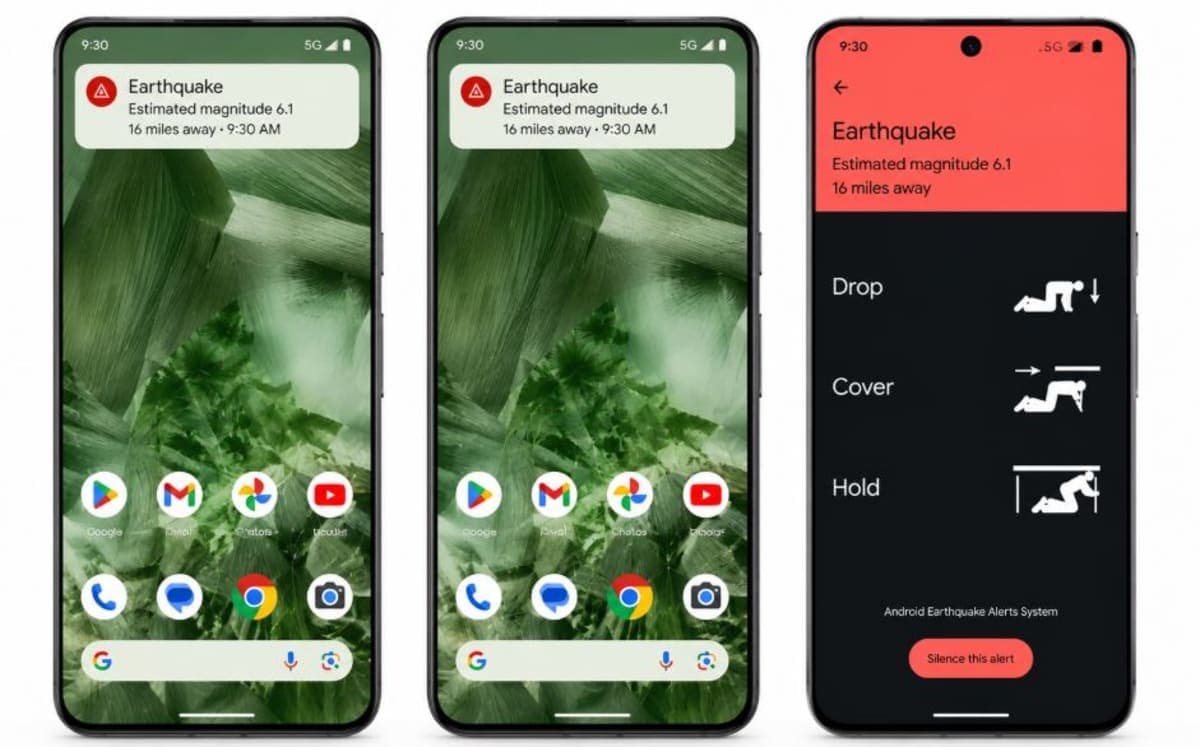
Google's Android Earthquake Alerts system detected today's earthquake within seconds and warned millions of Android users across Egypt before the strongest shaking arrived.
Millions of Egyptians woke up early today to an unusual notification on their Android phones warning of an earthquake just seconds before they felt the ground shake. The alert quickly sparked questions across social media: Did the phone predict the earthquake? Did Google know it was coming? And why did some people receive the notification while others did not?
The answer is simpler—and more impressive—than many assumed. The alert was not a prediction but the result of Google's Android Earthquake Alerts System, an early warning technology that transforms millions of Android smartphones into a massive earthquake detection network capable of identifying seismic activity within seconds and warning users before the strongest shaking arrives.
Android Doesn't Predict Earthquakes
Despite widespread speculation, no technology can accurately predict earthquakes minutes or hours before they occur.
Instead, Google's Android Earthquake Alerts system detects an earthquake immediately after it begins. By identifying the earliest seismic waves, the platform can calculate the earthquake's location and estimated magnitude, then send warnings to people farther away before the stronger waves reach them.
How the System Detects Earthquakes
Every Android smartphone contains an accelerometer, the motion sensor responsible for features such as automatic screen rotation and step counting.
Google uses this sensor in a unique way. When many Android devices in the same area simultaneously detect identical vibration patterns, they anonymously send motion data to Google's servers.
If the servers determine that thousands of phones have recorded the same seismic signature at nearly the same moment, the system concludes that an earthquake has occurred. It then estimates the epicenter and magnitude before distributing alerts to users expected to experience the strongest shaking.
In other words, Android phones are not just receiving alerts—they are also helping detect earthquakes.
Understanding Seismic Waves
Earthquakes generate two primary types of seismic waves:
- Primary waves (P-waves): The fastest waves, which usually cause little damage.
- Secondary waves (S-waves): Slower but significantly stronger, responsible for most of the destructive shaking people experience.
The Android system detects the faster P-waves first, analyzes the event, and sends alerts before the slower, more damaging S-waves arrive.
Why Some People Received the Alert While Others Didn't
Whether an Android user receives an earthquake notification depends on several factors, including:
- Running Android 5.0 or later.
- Google Play Services being enabled.
- An active internet connection.
- Location Services enabled.
- Earthquake Alerts turned on in device settings.
- Being located within a supported region.
In some cases, users may not receive a warning simply because they are too close to the earthquake's epicenter, leaving insufficient time for the alert to arrive before the stronger waves.
Why Did the Alert Arrive Only Seconds Before the Earthquake?
Many users wondered why the notification wasn't sent minutes in advance.
The explanation lies in physics.
An earthquake must occur before it can be detected. The system only becomes aware of the event after the first seismic waves have already been generated. Once those waves are detected, Google's servers process the data almost instantly and issue alerts to areas that have not yet experienced the strongest shaking.
The farther a person is from the epicenter, the greater the chance of receiving several seconds of warning.
Is the System 100% Accurate?
Although the Android Earthquake Alerts system has proven highly effective in many countries, it is not perfect.
Its performance depends on multiple factors, including:
- Earthquake magnitude.
- Distance from the epicenter.
- Number of Android devices in the affected area.
- Internet connectivity.
- Server processing speed.
As a result, users in the same city may receive alerts at different times—or not at all.
Does Google Collect Personal Data?
One common misconception is that the system continuously records audio or video.
Google says this is not the case.
The platform relies solely on anonymous motion data collected from the phone's accelerometer. It does not activate the microphone or camera, nor does it access personal content stored on the device.
Why Is the Service Now Available in Egypt?
Google has been rolling out Android Earthquake Alerts gradually across multiple countries over the past few years.
As the service expanded to additional regions, Egypt became one of the supported markets, allowing many Android users to receive warnings during the latest earthquake.
What About iPhones?
Unlike Android, Apple's iPhone does not operate a global earthquake detection network built from millions of smartphones.
Instead, iPhones rely on official government-operated emergency warning systems where such services are available and supported.
Can Just a Few Seconds Save Lives?
Although three to five seconds may seem insignificant, they can be enough to reduce the risk of injury.
Those few moments may allow someone to:
- Move away from windows.
- Exit an elevator.
- Take cover beneath a sturdy table.
- Step away from unstable objects that could fall.
These are among the actions recommended by emergency authorities during earthquakes.
The Android Earthquake Alerts system is not designed to predict earthquakes. Its purpose is to provide precious seconds of advance warning that could make a meaningful difference when every moment counts.