

From Shampoo to Biscuits: AI Is Revolutionizing Consumer Product Development
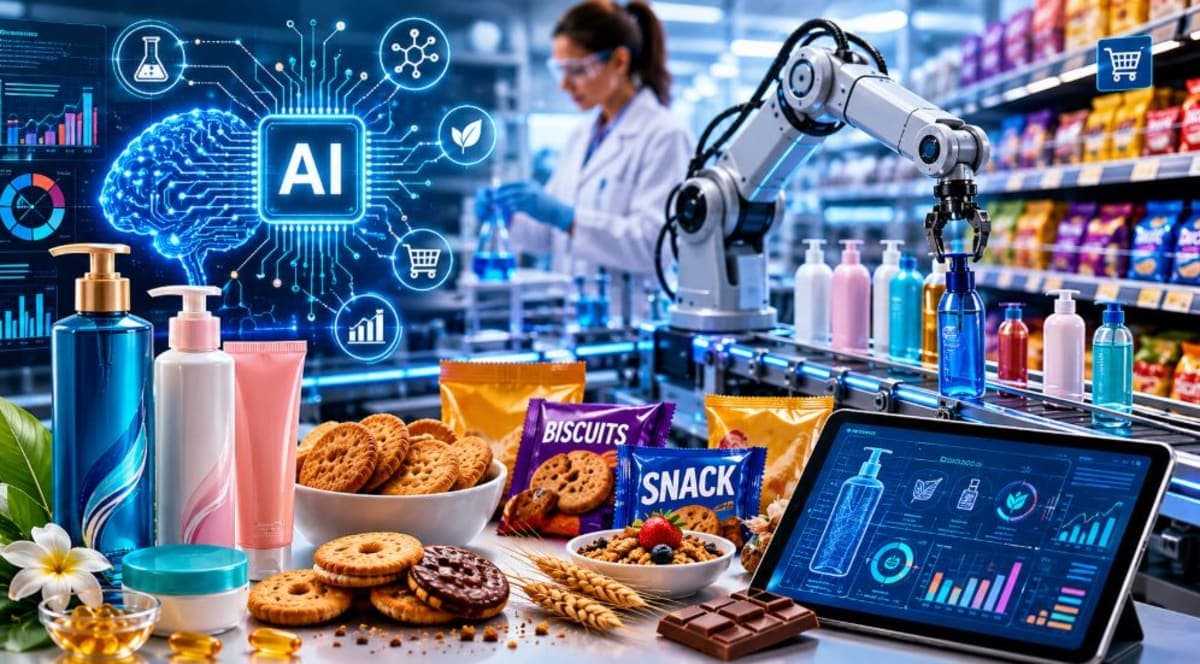
Global consumer goods companies are increasingly using artificial intelligence to develop new food, beverage, and personal care products, dramatically accelerating innovation and product testing.
Artificial intelligence is expanding into an unexpected arena—the supermarket shelf. Major consumer goods companies are no longer using AI solely for advertising, customer service, or data analysis. Instead, they are leveraging advanced AI models to develop new shampoo formulas, food products, snacks, and confectionery, while accelerating ingredient testing and significantly reducing the time it takes to bring new products to market.
AI Moves Into Product Development
According to a Reuters report, L'Oréal has used artificial intelligence to identify skincare molecules that can be repurposed for use in shampoo formulations, enabling the company to develop new products up to four times faster than before.
Other global consumer goods companies, including Nestlé, Haleon, and Mondelez International, are also integrating AI into product innovation. Their applications range from generating new recipes and testing ingredients to optimizing product formulations and addressing vulnerabilities in supply chains.
Mondelez, the maker of brands such as Cadbury and Oreo, says AI has shortened product development cycles from several months to just a few weeks in certain cases.
AI Is Reshaping Consumer Goods Innovation
The growing adoption of AI highlights how the technology has moved beyond smartphones and data centers into research laboratories and industrial product development.
As a result, consumers may soon purchase products whose formulas were partially designed by AI—often without realizing it.
For manufacturers, AI offers an opportunity to respond more quickly to changing consumer preferences while reducing development costs and improving efficiency.
However, the trend also raises important questions. Will AI lead to better, more affordable products, or will the race to innovate allow algorithms to increasingly shape the taste, texture, fragrance, and overall design of everyday consumer goods before human experts do?